

Welcome to my wellness and transformation space!
I am Esther, an integrative hypnotherapist, acupuncturist, nutritionist, among many other therapies, and I am here to accompany you on your path to a healthier, more balanced, and fulfilling life. My mission is to help you unlock your potential, alleviate your concerns, and improve your quality of life through natural and personalized techniques. Explore my services and discover how we can work together to achieve your goals. I am delighted to accompany you on this journey to your well-being!
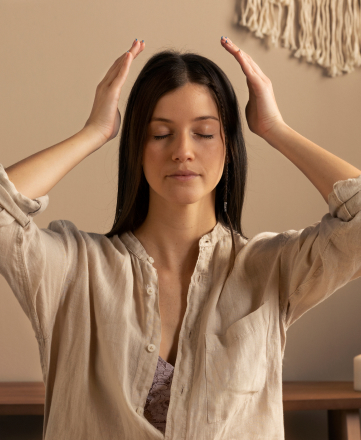
Hypnosis Your Journey to Self-Discovery
WHAT IS hypnosis?
Hypnosis is a mental state of intense concentration and focused attention, often described as a trance, where a person becomes more receptive to suggestions. In this state, individuals can experience changes in perception, sensations, thoughts, and behavior. Clinical hypnosis, performed by trained professionals, is used as a tool in psychotherapy to help with various issues such as anxiety, pain, stress, and even to quit smoking or lose weight.
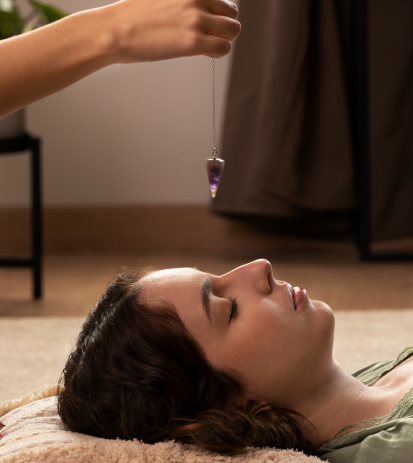
Most people can indeed be hypnotized. Specifically, according to a study by W. E. Edmonston from the 1980s, 86% of people can be hypnotized and benefit from therapeutic hypnosis. This means that for the remaining 14%, hypnosis will not be very useful in therapy.
But moreover, among people who can be hypnotized, there are degrees, as there are people with whom it works more easily. These are people who are more suggestible, and this is what favors a person being hypnotized and hypnosis being successful. Thus, with highly suggestible individuals, hypnosis can be applied to reduce labor pain by acting as an analgesic, or even to substitute analgesics in surgical operations; and to reduce pain perception in radiological and oncological procedures, burns, osteoarthritis, fibromyalgia, among others. Also, with individuals of medium suggestibility, it can be used to work on relaxation, anxiety, phobias, post-traumatic stress, depression, eating disorders, addictions, among others.
Hypnosis feels like a state of deep relaxation and focused concentration, where the mind becomes more receptive to suggestions. It's like being in a dreamlike state, where you experience a sense of lightness and calmness, and can access deeper levels of the mind.
To begin to discuss how hypnosis works in the brain, we first need to define the term “hypnosis.” It is far from true that clinical hypnosis from the image one can conjure of magic and fairs. Every day, more scientific cases demonstrate that Clinical hypnosis is science. A field in very bad standing due to the intrusion by people without a university education. But it is gaining more relevance in areas of psychology and medicine due to its effectiveness and lack of harmful side effects for the patient. Today I present some scientific documentation to demonstrate its power.
No, hypnosis is not the same as sleep. While both states can involve relaxation and changes in consciousness, they are distinct phenomena. Hypnosis is a state of focused attention and suggestion, where the person remains awake and aware, albeit with increased receptivity to suggestions. Sleep, on the other hand, is a natural state of rest with different patterns of brain and muscle activity.
No, it's not possible to get stuck in hypnosis. Hypnosis is an altered state of consciousness where the person remains in control and can come out of the trance whenever they wish., according to GiKids experts y TopDoctors.It is not a passive state of loss of will, but an active collaboration in which the person can interrupt the experience at any time.
Hypnosis offers a variety of benefits for physical and mental health, including stress and anxiety reduction, pain management, improved athletic performance, and assistance in overcoming trauma and phobias. It can also be helpful in promoting healthy habits such as quitting smoking or losing weight.
Types of hypnotherapy

Therapeutic Approach to Addictive Behaviors
Past Life Regression

Pain, anxiety, and depression support.
Hypnotic Gastric Band